Why Winter Falls in Brooklyn Are Harder to Prove Than You Think
Key Takeaways: The storm in progress doctrine holds that New York property owners, tenants, and snow removal contractors generally are not liable for snow or ice accumulating during an ongoing storm, with duty resuming only after reasonable time passes once weather stops. A "wintery mix" of sleet or freezing rain may trigger the defense, and temporary lulls generally don’t restart the owner’s obligation. These motions often turn on certified meteorological evidence rather than personal recollection. The doctrine isn’t absolute: pre-existing ice, negligent snow removal, and non-storm water sources may fall outside its protection. Claims against snow removal contractors are limited by Espinal exceptions, and falls involving municipal property may involve prior written notice rules and shorter filing deadlines. Most New York slip and fall lawsuits must be filed within three years under CPLR § 214(5).
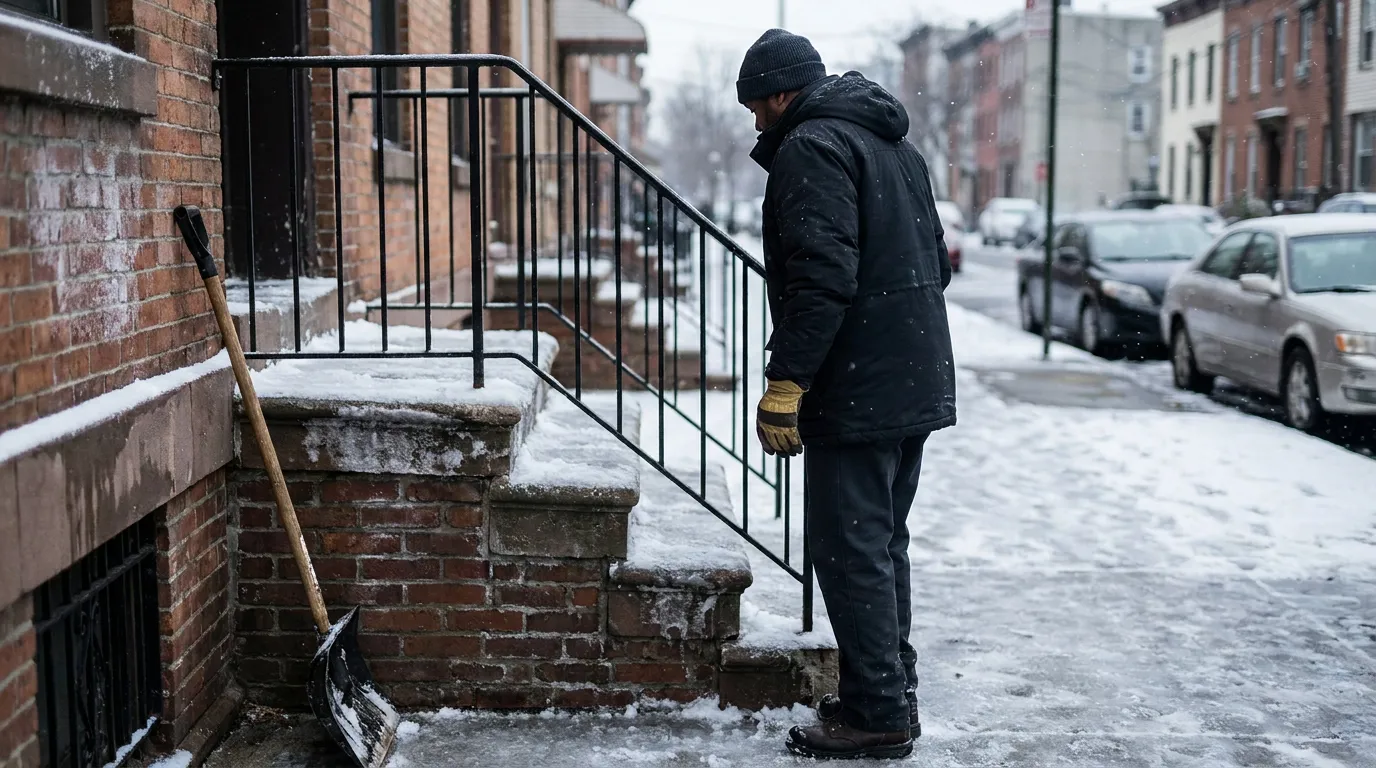
If you slipped on ice during a snowstorm and were told the property owner "isn’t responsible," you’ve encountered the storm in progress doctrine. Under this rule, property owners, tenants, and snow removal companies generally aren’t held liable for snow or ice accumulating while a storm is still falling. Liability may attach only after weather stops and reasonable time passes for cleanup.
If a storm in progress defense has been raised against your claim, you don’t have to sort through weather records alone. The team at Goldberg Sager & Associates has extensive experience handling snow and ice liability cases for injured Brooklyn residents. Call 718-645-6677 or contact us now for a free consultation.
The Core Rule Behind the Storm in Progress Doctrine in New York
New York courts describe the doctrine narrowly: no obligation to remedy storm-related accumulation arises until reasonable time passes following the storm’s cessation. Porter v. Mason Ave. Holding Corp., 2022 NY Slip Op 51195(U), collected Second Department authority stating this rule. The theory is fairness: an owner cannot be expected to clear a hazard nature is actively creating.
What counts as "reasonable time" is fact-dependent. Courts consider storm severity, property type, time of day, foot traffic, and the owner’s actions after precipitation stopped.
A "Wintery Mix" Is Enough to Trigger the Defense
The doctrine isn’t limited to heavy snowfall. New York courts have held that a "wintery mix" of sleet, freezing rain, or rain may suffice to support the storm-in-progress doctrine, citing Sherman v. New York State Thruway Auth., 27 NY3d 1019 (2016) and Solazzo v. New York City Tr. Auth., 21 AD3d 735 (1st Dept. 2005), affd 6 NY3d 734 (2005). Light freezing drizzle may qualify as a storm for legal purposes.
A Lull in the Weather Does Not Restart the Clock
Many assume if snow stopped for an hour, the owner’s duty kicked back in. New York courts have rejected this, holding that a lull in a continuing storm doesn’t impose duty to remove accumulation before the storm ceases entirely, citing Johnson v. Pawling Cent. Sch. Dist., 196 AD3d 686 (2d Dept. 2021), and Fenner v. 1011 Rte. 109 Corp., 122 AD3d 669 (2d Dept. 2014). The relevant question is when the entire weather event ended, not when the sky cleared.
How Weather Evidence Actually Decides These Cases
Storm in progress motions are won or lost on meteorological proof, not eyewitness memory. Defendants often prevail using a certified forensic meteorologist’s affidavit based on NOAA records showing precipitation bracketing the plaintiff’s fall. Courts have observed that interpretation of meteorological data "is beyond the ken of an ordinary person," from Wadsworth Condos LLC v. Dollinger Gonski & Grossman, 114 AD3d 487 (1st Dept. 2014).
Personal observation without competing analysis is generally insufficient. Countering a storm in progress defense may require retained weather analysis obtained early, while records and photographs are available.
💡 Pro Tip: Photograph the ice, surrounding walkway, and any visible salt, sand, or shovel marks before leaving the scene if physically able. Evidence of partial clearing can matter later.
When the Doctrine May Not Protect a Property Owner
The storm in progress defense shields against storm-created accumulation, not every winter hazard. Several fact patterns may fall outside it:
- Pre-existing ice. If the hazard formed during an earlier storm and the owner had notice, the current storm generally doesn’t excuse it, though the plaintiff must show the fall was caused by that older condition.
- Negligent snow removal. Owners who begin clearing during a storm must act with reasonable care and may face liability for creating or worsening a hazard, under Petrocelli v. Marrelli Dev. Corp., 31 AD3d 623 (2d Dept. 2006). However, merely failing to remove all snow doesn’t establish the owner created or increased the risk, per Aronov v. St. Vincent’s Hous. Dev. Fund Co., 145 AD3d 648 (2d Dept. 2016).
- Non-storm causes. Leaking gutters, defective drainage, or refreeze from an owner’s water discharge may be analyzed separately, though notice of the defective condition is still required.
Proving these exceptions requires documentation gathered quickly. Our discussion of suing a property owner for uncleared snow walks through the evidence that matters most.
Why Suing the Snow Removal Contractor Is Rarely Simple
Injured pedestrians often assume the plowing company is an easy target, but New York law says otherwise. A snow removal contractor typically owes no tort duty to injured third parties unless one of three exceptions from Espinal v. Melville Snow Contrs., 98 NY2d 136 (2002) applies: launching a force or instrument of harm through affirmative negligence, detrimental reliance by the injured person, or a comprehensive contract that entirely displaces the owner’s duty.
Courts apply these exceptions narrowly. In Porter, claims against the contractor were dismissed under Espinal and Canciani v. Stop & Shop Supermarket Co., 203 AD3d 1011 (2d Dept. 2022). Identifying every potentially responsible party, owner, tenant in possession, managing agent, matters from the outset.
How Storm in Progress Fits Into Broader Premises Liability
Storm in progress is a defense layered on top of ordinary New York premises liability principles. A person injured while lawfully on someone else’s property may hold the owner liable when the owner’s negligence in handling an unsafe condition caused the injury.
Notice is often the most contested element. A plaintiff must show the owner created the condition or knew or should have known about it and failed to remedy it within reasonable time. The storm in progress doctrine suspends the obligation to remedy storm accumulation while precipitation continues, making the storm timeline the central battleground.
Municipal Property Follows Different Rules
Falls on village sidewalks, streets, and bridges may involve prior written notice. Under CPLR § 9804, no civil action may be maintained against a village for injuries from snow or ice unless written notice of the condition at that location was given to the village clerk and the village failed within reasonable time to remedy it. Cities, towns, and counties have their own provisions.
Claims against government entities follow stricter procedural rules. A notice of claim generally must be served within 90 days under General Municipal Law § 50-e, and suit typically must commence within one year and 90 days rather than three years. Missing a municipal notice deadline may end a claim regardless of the underlying facts.
Deadlines That Apply Even When a Storm Defense Is Raised
New York slip and fall victims suing private defendants generally have three years from the accident date to file. That deadline comes from CPLR § 214(5) for personal injury and CPLR § 214(4) for property damage.
| Claim Type | General Deadline | Governing Authority |
|---|---|---|
| Personal injury from a slip and fall | 3 years from the accident date | CPLR § 214(5) |
| Property damage from the same incident | 3 years from the accident date | CPLR § 214(4) |
| Claims involving government entities | Shorter, separate notice rules may apply | Municipal claim procedures |
Exceptions exist, but New York courts interpret them narrowly. Applicable time limits can vary by injury type, the injured person’s age or capacity, and defendant identity.
💡 Pro Tip: Don’t wait for medical treatment to conclude before speaking with counsel. Weather records, surveillance video, and maintenance logs are often overwritten or discarded within weeks.
Practical Steps That Strengthen a Winter Fall Claim
Actions taken in the days after a fall may improve the evidentiary picture:
- Notify the property owner or manager immediately and request written confirmation.
- Seek medical attention promptly and document injuries, symptoms, and limitations.
- Preserve footwear, clothing, photographs, and witness contact information.
- Write down the exact time of your fall and weather conditions, since precise timing can be decisive.
Because winter premises liability often turns on timing and expert weather analysis, early involvement of a Brooklyn slip and fall lawyer can shape what evidence survives.
Frequently Asked Questions
1. Does the storm in progress doctrine mean I have no case if I fell during snowfall?
Not necessarily. The doctrine addresses accumulation created by the ongoing storm. If ice predated the storm and the owner had notice, or if the owner’s clearing efforts created the hazard, exceptions may apply.
2. How do courts determine when a storm actually ended?
Courts rely on certified meteorological analysis of official weather records rather than personal recollection. Lay disagreement alone generally won’t defeat a properly supported expert affidavit.
3. Can I sue the company that plows the parking lot?
Often no, unless an Espinal exception applies. Contractors generally owe no duty to third parties absent launching a force or instrument of harm, detrimental reliance, or a comprehensive contract displacing the owner’s duty.
4. Is the deadline different if I fell on a city or village sidewalk?
Yes, claims involving government entities are subject to stricter and shorter requirements, such as a 90-day notice of claim and one year and 90 day suit deadline. Prior written notice requirements may also bar certain claims entirely.
5. What if it had stopped snowing for a while before I fell?
A temporary lull generally doesn’t restart the owner’s obligation. Courts have held that a break in a continuing storm doesn’t create duty to clear before the storm ceases entirely.
What This Means for Your Winter Injury Claim
The storm in progress doctrine is a real and frequently successful defense, but it may be narrower than insurers suggest. It protects owners only from hazards created by an active storm, and only until reasonable time passes after weather stops. Pre-existing ice with notice, negligent partial clearing, and non-storm water sources may fall outside its protection, and the three-year civil deadline under CPLR § 214(5) continues to run.
Don’t let a defense label discourage you from having your case evaluated. Goldberg Sager & Associates is trusted by injured clients throughout Brooklyn and offers free consultations, including home and hospital visits when travel is difficult. Call 718-645-6677 or schedule your free case review today.
Disclaimer: This content is for informational purposes only and is not legal advice. Every case is unique, and results may vary. Consult an attorney about your specific circumstances.