The Hidden Witness Inside Your Vehicle After a Brooklyn Collision
Key Takeaways: A vehicle’s event data recorder captures a brief technical snapshot around a crash, typically including pre-crash speed, throttle position, brake application, steering input, seatbelt status, airbag deployment timing, and delta-V. These devices usually sit within the airbag control module, and federal minimum content and survivability rules appear in 49 CFR Part 563, while New York addresses these devices by statute in Vehicle and Traffic Law §416-b. Under §416-b, the recorded data is generally considered to belong to the vehicle owner, so access generally requires consent, a court order, or civil discovery under CPLR §3101. Preservation is often the biggest practical hurdle, because vehicles may be repaired, salvaged, or released within weeks and some modules can be overwritten, making prompt spoliation letters and documentation important. EDR downloads rarely stand alone and are usually paired with the police accident report, scene photographs, medical records, and reconstruction analysis. Deadlines under CPLR §214 and the much shorter municipal notice of claim rules under General Municipal Law §50-e make early legal involvement important.
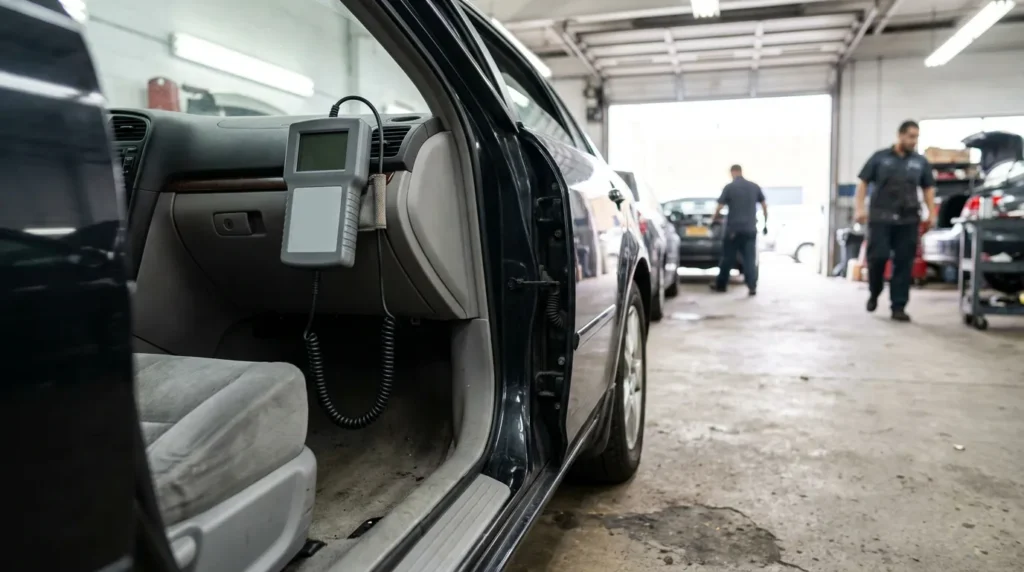
Most modern vehicles quietly record a short burst of technical information in the seconds surrounding a crash, and that recording can become some of the most persuasive proof in an injury claim. An event data recorder, often called a car black box, generally captures pre-crash speed, throttle position, brake application, steering input, seatbelt status, airbag deployment timing, and change in velocity during impact. These measurements typically come from the airbag control module and are stored for only a handful of seconds before and during the collision. For an injured driver, passenger, motorcyclist, or pedestrian in New York City, that small window of data may confirm what a negligent driver denies.
If you were hurt in a collision and believe vehicle crash data New York investigators could preserve might support your claim, the team at Goldberg Sager & Associates is available to discuss your situation. Call 718-645-6677 or reach out to our office now to talk about preserving evidence before it disappears.
What Does an EDR Record in the Moments Around Impact?
Event data recorders generally capture a narrow but highly technical snapshot rather than a continuous video-style log. Federal rules standardize what these devices must store, so an EDR pulled from a sedan in Bay Ridge generally contains comparable fields to one pulled from a vehicle elsewhere in the country. NHTSA regulates these devices through 49 CFR Part 563 requirements for recorders, which set minimum data elements, recording intervals, and survivability and retrievability standards. Federal law does not require every vehicle be built with an EDR; Part 563 applies to vehicles voluntarily equipped with one.
Under New York law, these devices are addressed by statute. Vehicle and Traffic Law §416-b concerns event data recorders that record technical vehicle and crash information, such as speed, braking, and restraint use, in connection with a crash event. That statutory treatment matters because it frames how courts and parties handle EDR crash data when a dispute arises over liability, although the statute does not dictate admissibility of any particular download, which remains subject to ordinary evidentiary foundation and expert rules.
Common Black Box Data Points
| Data Element | What It May Show |
|---|---|
| Pre-crash speed | Vehicle velocity in the seconds before impact |
| Throttle position | Whether the driver was accelerating |
| Brake switch status | Whether brakes were applied, and when |
| Delta-V | Change in velocity during the collision |
| Seatbelt status | Whether occupants were restrained |
| Airbag deployment | Timing and stage of deployment |
These fields depend on the make, model, and model year of the vehicle, and not every vehicle stores every element.
Who Owns Event Data Recorder Crash Evidence in New York?
New York generally treats the recorded information as belonging to the vehicle owner, rather than the manufacturer or insurance company. Under VTL §416-b, located in Article 16 of the Vehicle and Traffic Law, data recorded or transmitted by an event data recorder is generally considered the property of the vehicle’s owner, regardless of who built the device. That statute establishes the ownership and access framework for EDR data in New York and generally restricts third parties from downloading the information without authorization.
Access is generally limited to specific circumstances, including owner consent, retrieval pursuant to a court or administrative order, servicing and diagnostic purposes by a licensed dealer or trained technician, safety research in which the owner’s identity is not disclosed, or emergency medical response purposes. The statute also generally requires that the presence of a recorder be disclosed to a purchaser or lessee, typically in the owner’s manual. These rules do not displace separate obligations that may arise once litigation is reasonably anticipated.
That ownership rule can cut both ways in litigation. If the at-fault driver owns the vehicle holding the decisive data, a plaintiff generally cannot simply download it. Counsel may need to seek disclosure through civil discovery under CPLR §3101 or a court order, and courts may weigh relevance, burden, and the "material and necessary" standard before compelling production or a supervised download.
Preserving Crash Data Before It Is Overwritten
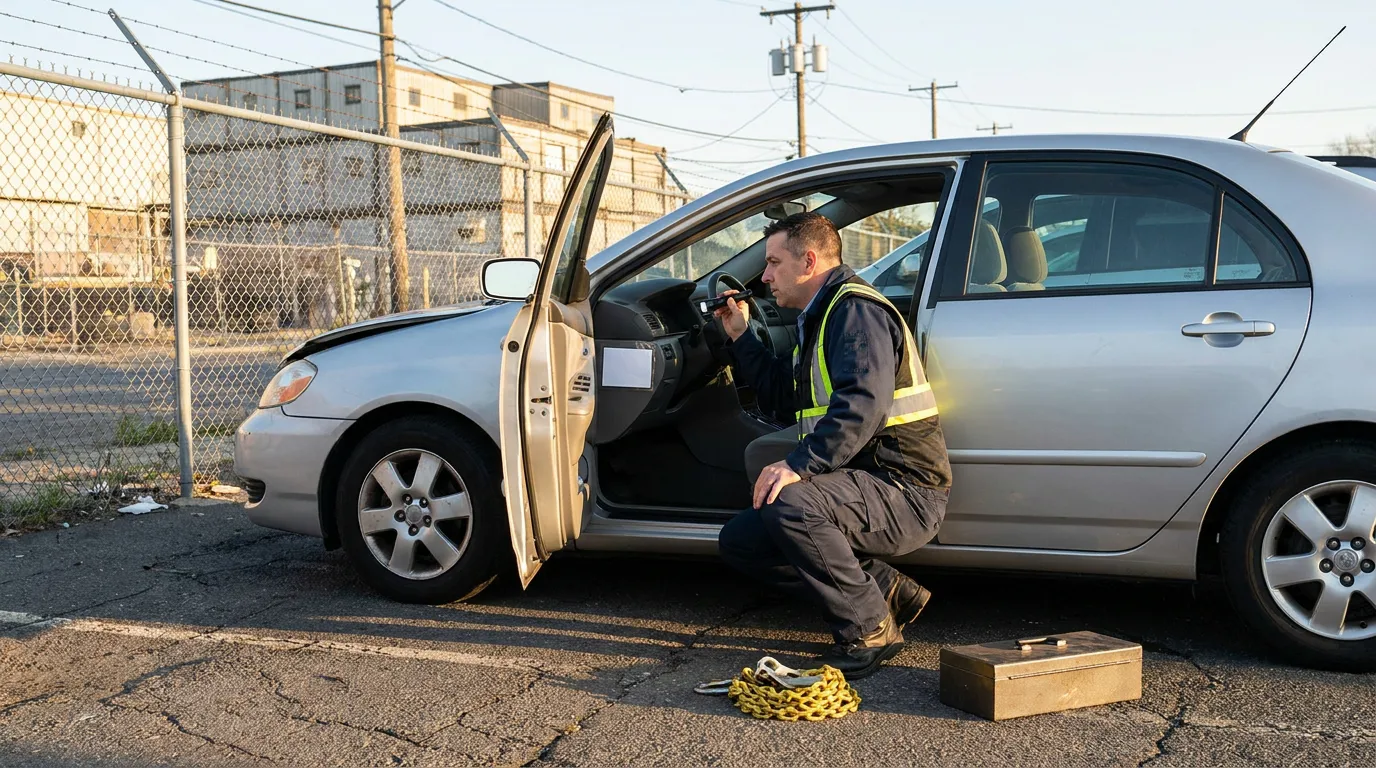
Timing is often one of the biggest practical obstacles in these cases. Vehicles may be repaired, resold, scrapped, or released from tow yards within weeks, and some non-locked event records can be overwritten by later ignition cycles or lost during service. A prompt spoliation letter to the owner, insurer, and storage facility may help prevent that, and New York courts have discretion to sanction a party that destroys evidence it was obligated to preserve.
Gathering technical proof is frequently harder than clients expect, which is why evidence in a personal injury case may be difficult to obtain without early legal involvement. Practical steps that may help preserve New York car accident evidence include:
- Photographing the vehicle identification number and damage before repairs begin
- Recording the tow yard or body shop name and location
- Noting the make, model, and year of every vehicle involved
- Requesting that insurers hold the vehicle rather than authorize salvage
- Obtaining the police accident report as soon as it becomes available
💡 Pro Tip: Ask in writing that the vehicle be held in its post-crash condition. A dated written request creates a record that may support a later spoliation argument if the data disappears.
How Reports and Records Fit Together
An EDR download rarely stands alone; it usually corroborates other documentation. New York uses a standard police accident report, and drivers involved in qualifying crashes may have their own reporting obligations under Vehicle and Traffic Law §605 and related provisions. Those reports are typically compiled alongside technical evidence when a reconstruction analyst rebuilds the sequence of a crash. Scene photographs, roadway measurements, and medical records generally complete the picture. Portions of accident reports, including uncertified copies or hearsay statements within them, are not always admissible at trial.
When crash evidence becomes part of official filed records, production rules may apply. Under civil practice fee provisions for court records, production of a filed paper that is part of the public records of a county clerk’s office is generally prohibited unless the clerk consents or the court orders it, with a certified copy usable as evidence instead. Where a court orders production of an original, statutory attendance and mileage fees apply and should be confirmed before a subpoena duces tecum is served.
Parallel Disclosure in Civil Cases
Civil litigation includes built-in disclosure obligations that run alongside evidence exchange. Under CPLR §3101(f), a defendant is generally required to provide the plaintiff with proof of the existence and contents of any insurance agreement that may be liable to satisfy a judgment, with the current statute setting a ninety-day deadline from service of the answer. That timeline generally runs parallel to the exchange of EDR downloads and other technical materials, and courts may adjust disclosure schedules by stipulation or order.
When Criminal Proceedings Overlap
A serious or fatal collision may generate a parallel criminal case with its own disclosure rules. Criminal Procedure Law §245.20(1) generally requires the prosecution to turn over reports, records, data, calculations, bench notes, and analyses concerning scientific tests relating to the criminal action, which may extend to EDR reports used in a vehicular crime prosecution, including calibration, certification, inspection, repair, and maintenance records for instruments used in Vehicle and Traffic Law prosecutions. Those criminal discovery obligations do not apply in a civil case, which is governed by Article 31 of the CPLR, though materials from the criminal matter may sometimes be obtained by subpoena or FOIL once the prosecution concludes.
Deadlines That Can Affect Your Claim
New York applies filing deadlines to personal injury actions, and missing one can end a case regardless of its merits. The general limitations period for negligence actions is three years under CPLR §214, while wrongful death actions are governed by a two-year period under EPTL §5-4.1. Claims against municipal entities carry separate, much shorter requirements, including a notice of claim within ninety days of accrual under General Municipal Law §50-e and a shortened one year and ninety day period to sue. Anyone injured by a city bus or municipal vehicle should treat those timelines as urgent, and certain public authorities have their own rules.
Discovery-based timing rules exist, but courts may interpret them narrowly. Under CPLR §203, where the time to commence an action is computed from when facts were discovered or could with reasonable diligence have been discovered, the action must generally be commenced within two years after such discovery, or within the period otherwise provided from accrual, whichever is longer. This generally applies only where a statute ties accrual to discovery, and it does not extend an ordinary negligence deadline simply because EDR data was reviewed late. Whether any extension or toll applies is fact-dependent and should be evaluated by counsel promptly.
Frequently Asked Questions
1. Does every car sold in New York have an event data recorder?
No. Federal standards govern what a recorder must capture if equipped, but do not require every vehicle to have one. Most late-model vehicles include one within the airbag control module, and VTL §416-b generally requires disclosure of its presence, typically in the owner’s manual.
2. Can I get the other driver’s black box data after a crash?
Generally not on your own. Because New York treats the data as the vehicle owner’s property, access typically requires the owner’s consent or a court order. Counsel may pursue it through civil discovery under CPLR §3101, subject to the court’s assessment of relevance and burden.
3. How long does EDR data stay on the vehicle?
It varies by manufacturer and whether the module locked the event. Some non-deployment events may be overwritten by later ignition cycles, and a totaled vehicle may be salvaged within weeks. Prompt preservation requests are generally the safest approach.
4. Will the data alone prove the other driver was at fault?
Rarely by itself. Downloads generally show mechanical inputs, not intent, roadway conditions, or sight lines, and must still be properly authenticated and interpreted. A reconstruction analyst typically combines throttle position readings, scene evidence, and witness accounts, and outcomes depend on the specific facts.
5. Does no-fault insurance cover me while liability is investigated?
New York no-fault benefits generally cover medical expenses and a portion of lost earnings regardless of who caused the crash, subject to policy limits, eligibility rules, and strict notice deadlines. Pursuing pain and suffering damages from the at-fault party typically requires meeting the serious injury threshold under Insurance Law §5102(d).
Putting the Technical Proof to Work
Event data recorder crash evidence may turn a disputed liability argument into a documented sequence of speed, braking, and restraint use. New York’s statutory framework generally protects that information as owner property while permitting access through consent, lawful process, or court order, and civil discovery rules may provide the mechanism for obtaining it in litigation. The practical challenge is often speed, because vehicles and the modules inside them do not wait for claims to develop. Every case turns on its own facts, and an early case evaluation generally gives injured people a clearer view of their options.
If you or a loved one suffered injuries in a Brooklyn or New York City collision, our event data recorder crash evidence lawyer team at Goldberg Sager & Associates is ready to listen. Call 718-645-6677, visit our firm’s website to learn more, or schedule your consultation today so we can begin preserving the proof your claim may depend on.
Disclaimer: This content is for informational purposes only and is not legal advice. Every case is unique, and results may vary. Consult an attorney about your specific circumstances.