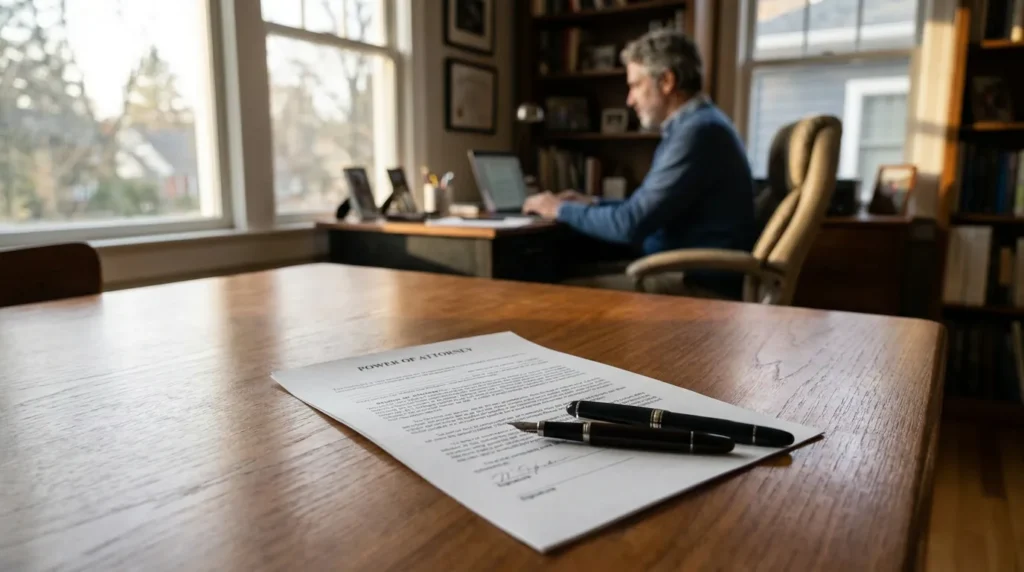
Understanding New York’s Two-Witness Rule for Powers of Attorney
Key Takeaways: In New York, a power of attorney executed on or after June 13, 2021 requires two disinterested witnesses plus notarization to be valid. Under GOB §5-1501B(1)(b), the principal’s signature must be acknowledged before a notary and witnessed by two people who are not named as agents or gift recipients, though the notary may serve as one witness. The 2021 reforms eliminated the separate Statutory Gift Rider, so gifting authority beyond $5,000 annually must now be granted in the Modifications Section. Using outdated forms or relying on a single witness generally renders the document invalid. A limited exception under §5-1512 may recognize powers of attorney properly executed in another state.
A power of attorney is generally not valid in New York without two witnesses if executed on or after June 13, 2021. Notarization alone will not suffice. Under GOB §5-1501B(1)(b), the signature must be acknowledged before a notary and witnessed by two persons who are not named as agents or permissible gift recipients. The statute allows the notary to also count as one witness. If your document lacks the second witness, its validity is at serious risk.
If you are preparing or reviewing this document, the team at Goldberg Sager & Associates is ready to help. Call our office at 718-645-6677 or reach out through our confidential contact form.
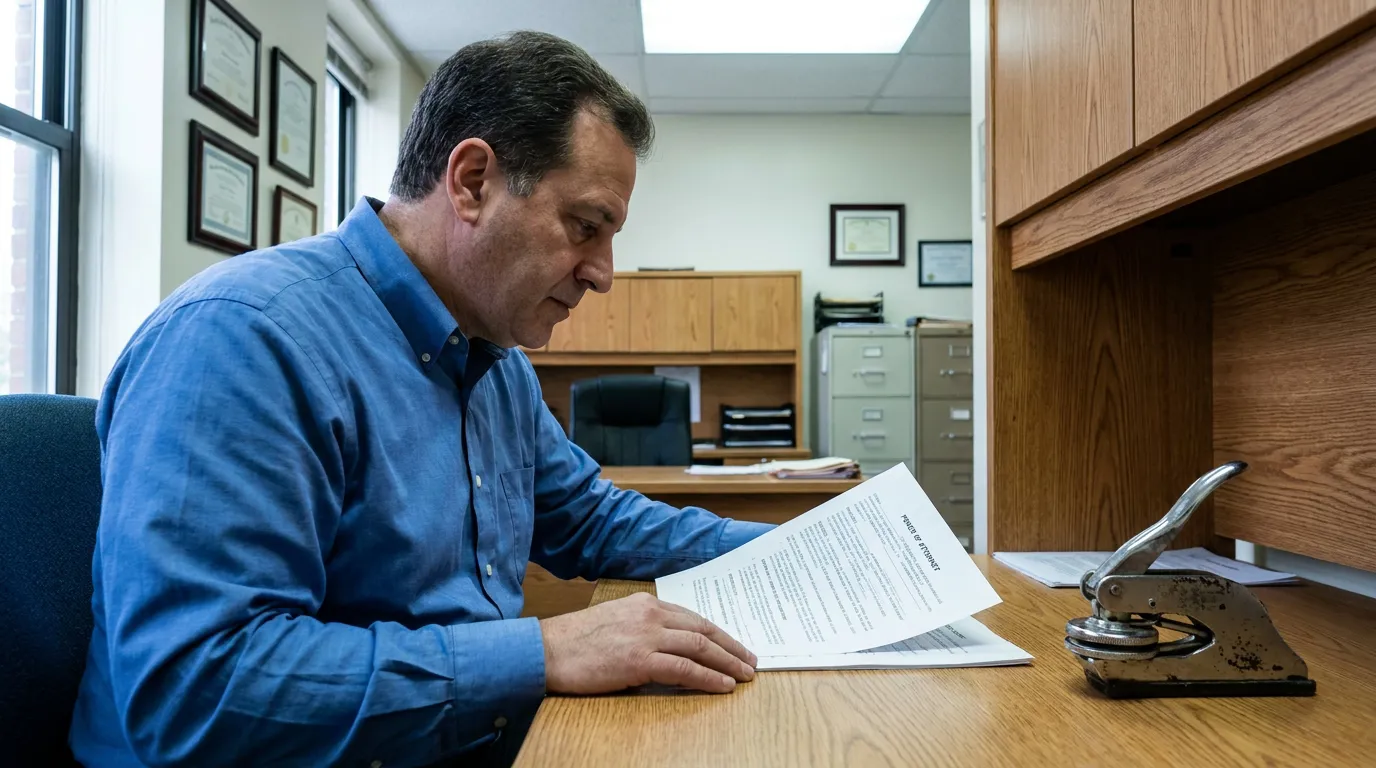
What New York Law Requires to Create a Valid POA
New York’s statutory short form power of attorney must be executed in strict accordance with General Obligations Law requirements. Article 5, Title 15 governs statutory short form and other powers of attorney used in financial and estate planning, setting out who can create the document, how it must be signed, and what makes it enforceable.
The statute defines validity by pointing to execution requirements. Under GOB §5-1501(2)(n), a statutory short form means one that meets the requirements of paragraphs (a), (b), and (c) of subdivision one of section 5-1501B, including notarization and witnessing rules, and that substantially conforms to the wording of the statutory form set forth in section 5-1513 of the title.
Who Can Sign as a Principal
Only certain individuals may create a power of attorney under New York law. GOB §5-1501(2)(k) defines a principal as an individual who is eighteen years of age or older, acting for himself or herself and not as a fiduciary or as an official of any legal, governmental or commercial entity, who executes a power of attorney. The agent holds a fiduciary relationship with the principal under GOB §5-1501(2)(a), which is why the law demands careful execution, the agent may gain significant authority over financial matters.
💡 Pro Tip: Before signing, confirm that every name, address, and initialed authority matches your intentions. Small clerical gaps can create big problems if the document is challenged in Surrogate’s Court.
The Two-Witness Requirement Explained
Two witnesses are now a validity requirement, not optional. For any POA executed on or after June 13, 2021, the document must be signed by two disinterested witnesses, individuals not listed as agents or gift recipients. This safeguard reduces the risk of fraud and undue influence.
The statutory form confirms two witnesses are required. Each witness attests that the principal signed in the witness’s presence and in the presence of the other witness. Under Section 5-1513, paragraph (n), a witness acknowledges that the principal signed the power of attorney in the witness’s presence and in the presence of the other witness, or acknowledged the signature was affixed at the principal’s direction. The form bars conflicted witnesses. You can read the complete language on the statutory short form power of attorney page.
Notarization and Witnessing Work Together
Notarization and witnessing are separate steps that both must be completed. The principal must sign and have the signature notarized, and two disinterested witnesses must sign and provide their information. GOB §5-1501B(1)(b) allows the notary to also serve as one of the two required witnesses, so a signing can be accomplished with the notary plus one additional qualified person.
💡 Pro Tip: Schedule your notary and both witnesses to be present simultaneously. Coordinating a single signing session ensures the presence requirement is genuinely satisfied.
Why the 2021 Law Changes Matter
New York’s power of attorney law changed significantly effective June 13, 2021. Any POA executed on or after that date must comply with updated requirements under General Obligations Law, Article 5, Title 15. A document using an outdated form or failing to comply with witness requirements will generally be invalid. However, a power of attorney validly executed before June 13, 2021 is grandfathered and remains enforceable.
The reform also eliminated the separate Statutory Gift Rider. Previously, gifting authority above a modest threshold required a separate attachment. Now, an agent may make gifts totaling up to $5,000 per year without special language, and gifting authority beyond that must be granted within the Modifications Section of the POA itself.
Common execution errors under current law include:
- Using a pre-2021 statutory form that no longer complies
- Relying on notarization alone without two disinterested witnesses
- Naming a witness who is also an agent or permissible gift recipient
- Attempting to use a separate gift rider instead of the Modifications Section
If you are deciding whether this document belongs in your plan, our overview of durable power of attorney New York considerations can help.
💡 Pro Tip: Keep the original signed document in a safe but accessible place, and tell your named agent where to find it. Financial institutions often require the properly executed original.
When a POA Signed Outside New York May Still Count
New York’s two-witness rule has a meaningful exception for out-of-state documents. GOB §5-1501B’s validity requirements apply except as otherwise provided in section 5-1512. A power of attorney lacking two New York witnesses may still be recognized if it was properly executed elsewhere, though this exception is best confirmed with counsel.
Section 5-1512 addresses documents executed in other jurisdictions. It provides that a power of attorney executed in another state in compliance with that state’s law or New York’s law is valid here, regardless of whether the principal is a New York domiciliary. You can review these rules in the out-of-state POA statute.
| Scenario | General Result in New York |
|---|---|
| POA executed in NY after 6/13/2021 with notary and two disinterested witnesses | Generally valid |
| POA executed in NY with notary but no second witness | Generally invalid |
| POA executed out of state following that state’s law | May be recognized under §5-1512 |
| POA using a pre-2021 form after 6/13/2021 | Generally invalid |
How a Power of Attorney Lawyer New York Families Rely On Can Assist
Working with counsel helps you avoid execution errors that undermine these documents. Because the rules are technical, small missteps in witnessing or notarization can leave loved ones scrambling later. An attorney reviews your goals, confirms the current statutory form is used, and coordinates proper signing.
Our firm brings extensive experience in probate and estate planning to clients across Brooklyn and greater New York City. From wills and trusts to health care proxies, we help put durable protections in place. Visit our estate planning attorney New York practice page to learn more.
Frequently Asked Questions
-
Is notarization alone enough to make a New York POA valid?
Generally no. For documents executed on or after June 13, 2021, GOB §5-1501B(1)(b) requires both notarization and two disinterested witnesses, although the notary may serve as one witness.
-
Who cannot serve as a witness on a New York POA?
Anyone named in the document as an agent or as a permissible recipient of gifts. Section 5-1513’s witness statement expressly confirms this restriction.
-
What happens if my POA uses an old form?
A POA executed after June 13, 2021 using an outdated form or failing to meet current requirements will generally be invalid. However, a POA validly executed before that date remains grandfathered and enforceable.
-
Can a POA signed in another state be used in New York?
It may be. Under GOB §5-1512, a power of attorney executed in compliance with another state’s law or New York’s law can be valid here, sometimes even without two New York witnesses.
-
Do I still need a separate gift rider to allow gifting?
No. The 2021 reform eliminated the Statutory Gift Rider. An agent may make gifts totaling up to $5,000 per year without special language; gifting authority beyond that must be granted within the Modifications Section.
Protecting Your Estate Plan Starts With Proper Execution
A New York power of attorney generally needs two disinterested witnesses and notarization to be valid under current law. The 2021 changes raised the stakes for proper execution, and documents that fall short may be invalid. Limited exceptions exist for out-of-state documents under §5-1512, but those are fact-specific and best confirmed with counsel.
If you want confidence that your document meets New York’s POA execution requirements, Goldberg Sager & Associates is here to help. Call our office at 718-645-6677 or send a message through our online consultation request to speak with a trusted New York probate lawyer.