Understanding Probate at the Kings County Surrogate’s Court
Key Takeaways: Filing for probate in Brooklyn means opening a legal proceeding at the Kings County Surrogate’s Court to validate a will and authorize an executor to manage the estate. The process begins by preparing and submitting a probate petition with supporting documents including the verification, oath, citation, and affidavit of service. The court must be satisfied with the will’s genuineness and valid execution before admission. Once letters testamentary are issued, the executor can gather assets, address debts, and complete a final accounting, tracking key timelines like the eighteen-month real property benchmark. While the court’s Help Center assists self-represented filers with straightforward estates, complications like will contests, missing heirs, or significant real property often require a knowledgeable Brooklyn probate attorney.
Filing for probate in Brooklyn means opening a legal proceeding to validate a loved one’s will and authorize someone to manage their estate. When a person passes away owning property in their name alone, their estate generally must go through the Surrogate’s Court before assets can be distributed. For Brooklyn residents, that court is the Kings County Surrogate’s Court, and understanding its procedures early can spare your family confusion during a difficult time.
If you need compassionate guidance, the team at Goldberg Sager & Associates is ready to help. Call us at 718-645-6677 or reach out through our online contact form to discuss your situation with a trusted Brooklyn probate attorney.
Where Brooklyn Estates Are Filed
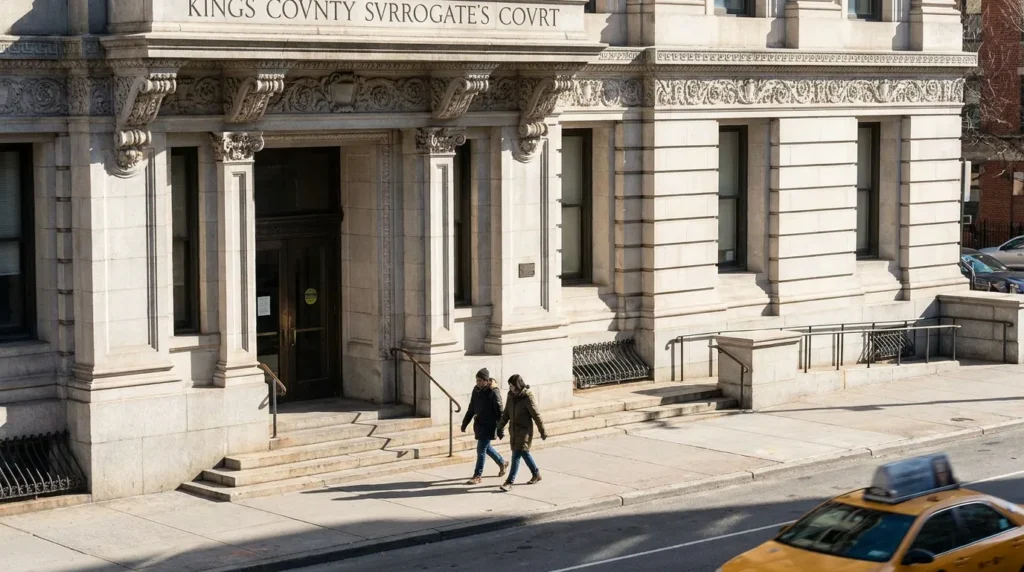
Probate jurisdiction in New York is county-based, determined by where the decedent lived at the time of death. Because a Brooklyn resident is domiciled in Kings County, their estate must be handled by the Kings County Surrogate’s Court. The court is located at 2 Johnson Street, Brooklyn, NY 11201. Filing in the wrong county can delay your matter, so confirming domicile is an important first step.
Filing hours are Monday, Tuesday, Thursday, and Friday from 9:00 a.m. to 4:45 p.m., and Wednesday from 9:00 a.m. to 12:00 noon. Planning around these reduced Wednesday hours can save you a wasted trip.
💡 Pro Tip: Before heading to the courthouse, call ahead or check current filing requirements online. Arriving with a complete, organized packet reduces the chance of rejected paperwork.
The Statutory Framework Behind New York Probate
New York probate is governed primarily by the Surrogate’s Court Procedure Act, a comprehensive statute that sets the rules for every Surrogate’s Court in the state. The Surrogate’s Court Procedure Act became law on August 2, 1966, and this framework applies uniformly statewide, subject to local administrative practices.
The SCPA is organized by subject matter. Article 14 (sections 1401-1424) covers probate proceedings, while Article 10 (sections 1001-1007) addresses intestate administration, and Article 13 (sections 1301-1312) governs settlement of small estates. If your loved one died without a will, the administration rules differ from probate rules, and identifying the correct track early prevents missteps. You can learn more when you consult a lawyer familiar with these distinctions.
How to File for Probate in New York: The Petition Process
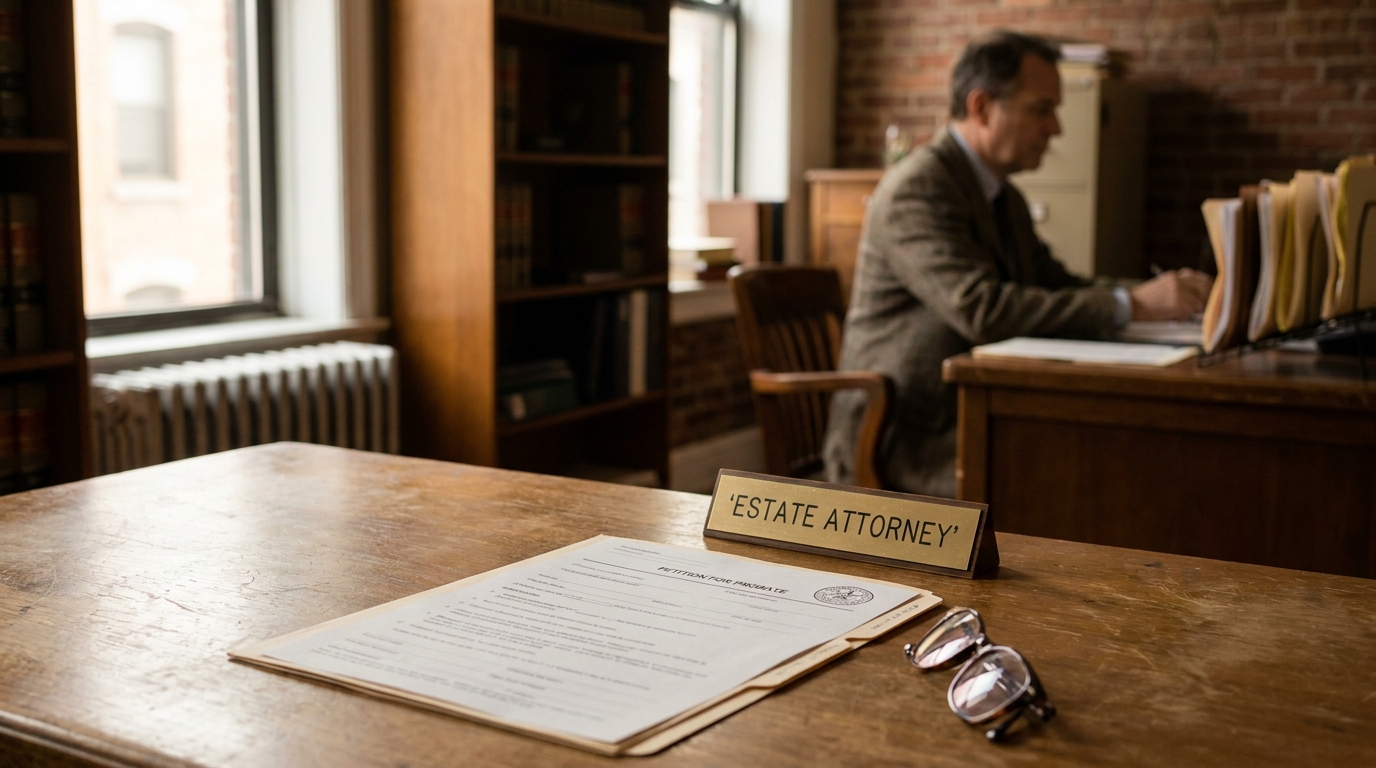
Learning how to file for probate in New York starts with preparing and submitting a probate petition to the Surrogate’s Court. This petition asks the court to recognize the will as valid and to issue letters testamentary to the named executor. The probate petition must include a verification, an oath or consent and designation, along with related forms such as the citation and affidavit of service. The citation notifies interested parties, and the affidavit of service confirms they received notice.
The court does not simply rubber-stamp a will once filed. Before admitting a will to probate, the court must inquire particularly into all the facts and must be satisfied with the genuineness of the will and the validity of its execution. If the court finds that the will was duly executed and that the testator was competent and not under restraint, it must be admitted to probate as valid to pass real and personal property. Questions of capacity or undue influence can complicate this stage.
Here is a simplified overview of common documents involved in a Brooklyn probate filing:
| Document | General Purpose |
|---|---|
| Probate petition | Requests admission of the will and issuance of letters |
| Verification | Confirms the truth of the petition’s contents |
| Oath and designation | Qualifies the proposed executor to serve |
| Citation | Provides notice to interested parties |
| Affidavit of service | Documents that notice was properly given |
💡 Pro Tip: Locate the original signed will before filing. Courts may apply stricter scrutiny when only a copy exists, and producing the original generally streamlines the proceeding.
What Happens After Letters Are Issued
Once the Surrogate’s Court issues letters testamentary or letters of administration, the executor gains legal authority to manage the estate. From this point, important timelines begin. Under New York’s Real Property Actions and Proceedings Law, a certificate showing that eighteen months have elapsed since the issuing of letters may become relevant to handling a decedent’s real property. This eighteen-month benchmark, found in RPAPL § 965, is a practical milestone many executors track when real estate is involved.
During administration, the executor must gather assets, address debts, and ultimately provide an accounting. Where a final accounting has been completed in New York, the account and decree of final settlement must reflect all assets collected, expenses paid, and claims addressed; however, the decree may direct that assets be retained to cover contingent or unliquidated debts, and funds may be released for distribution without all debts being fully paid, provided creditor issues are resolved or reserved as required by the SCPA. Providing this accounting is an essential responsibility, and skipping it can expose a fiduciary to liability.
A few practical realities tend to surprise first-time executors:
- Notifying all interested parties takes longer than expected, especially when heirs live out of state or cannot be located.
- Beneficiary disputes may require additional court appearances and extend timelines considerably.
- The surrogate’s certificate may be executed by the clerk under the court’s seal, meaning clerk-issued certified copies carry full legal weight.
💡 Pro Tip: Keep meticulous records of every estate transaction from day one. A clean paper trail makes the final accounting smoother and demonstrates you have honored your fiduciary duties.
Filing Without an Attorney and Where to Find Help
Some individuals choose to handle straightforward estates on their own, and the courts provide resources to support self-represented filers. Each county Surrogate’s Court offers a Help Center providing information on procedure, required forms, and referrals. This can be valuable for small or uncontested estates where issues are limited.
However, the probate process becomes considerably more demanding when complications arise. Will contests, ambiguous language, missing heirs, or significant real property can transform a simple matter into contested litigation. In many cases, working with a knowledgeable Surrogate’s Court Brooklyn advocate helps protect the executor and estate from costly errors.
💡 Pro Tip: If any beneficiary has expressed unhappiness with the will, consider seeking counsel before filing. Early strategy can reduce the risk of a drawn-out dispute.
Common Challenges in the Brooklyn Probate Process
The probate process in New York can stall for reasons that have little to do with the will itself. Locating and serving every interested party is frequently the first hurdle, since the court must be satisfied that proper notice was given. Estates that include real estate, business interests, or out-of-state assets often require additional steps and documentation.
Another recurring challenge involves debts and creditor claims. Because the estate generally cannot close until debts are confirmed as paid, unresolved obligations can delay distribution for months. A New York probate lawyer can help anticipate these issues, and you can review the broader scope of estate work through this overview of estate probate Brooklyn services. Patience and organization remain essential throughout.
Frequently Asked Questions
1. How long does the probate process in New York usually take?
Timelines vary widely depending on the estate’s complexity. Simple, uncontested matters may move relatively quickly, while estates involving real property or disputes can take well over a year. The eighteen-month benchmark tied to letters and real property is one reason many estates extend beyond a single year.
2. Do I need a will to file for probate in Brooklyn?
Probate specifically applies when there is a will to validate. When someone dies without a will, the estate proceeds through intestate administration under SCPA Article 10 rather than probate under Article 14. The correct path depends on whether a valid will exists.
3. Can the court reject a will?
Yes, the court can decline to admit a will if not satisfied with its validity. A court will not admit a will unless convinced of its genuineness and the validity of its execution under SCPA § 1408. Concerns about capacity, undue influence, or improper signing may all factor into that decision.
4. Where exactly do I file for a Brooklyn estate?
You file at the Kings County Surrogate’s Court at 2 Johnson Street. Because jurisdiction follows the decedent’s domicile, a Brooklyn resident’s estate belongs in Kings County. Confirming domicile before filing helps avoid procedural delays.
5. What is letters testamentary?
Letters testamentary are the court documents that authorize an executor to act. Once issued, they grant legal authority to collect assets, pay debts, and ultimately distribute the estate. Until letters are issued, an executor generally lacks the power to manage estate property.
Moving Forward With Confidence
Filing probate in Brooklyn NY involves careful attention to statutory requirements, court procedures, and strict fiduciary duties. From preparing the probate petition to completing the final accounting, each stage carries its own requirements and potential pitfalls. Knowing how to file for probate in New York gives executors and beneficiaries a clearer path, though details always depend on the unique facts of each estate.
If you are ready to begin a probate proceeding in New York or have questions about your responsibilities as an executor, Goldberg Sager & Associates is here to help with clear, compassionate counsel. Call us today at 718-645-6677 or send us a message through our confidential contact page to take the next step with confidence.