When Rainy Days Lead to Store Injuries in Brooklyn
Key Takeaways: You may be able to sue after slipping on tracked-in rainwater in a New York store, but success usually depends on whether the store created the condition or had actual or constructive notice of the water and failed to clean it up or warn customers within a reasonable time. The "storm in progress" rule can protect store owners while rain is still falling, but that protection generally ends once the storm stops and the owner has had a reasonable time to deal with the water. Weather records, photos, surveillance video, and prompt medical care can strengthen a claim. Under New York’s comparative negligence rule, being partly at fault generally reduces your recovery instead of barring it. Store employees are generally limited to workers’ compensation against their employer, and most personal injury claims against private parties must be filed within three years under CPLR 214(5).
You may be able to sue after slipping on tracked-in rainwater in a New York store, but whether a claim succeeds generally depends on timing, notice, and what the store did or failed to do. New York law does not make stores automatically responsible for every wet floor, but it also generally does not let them ignore puddles that build up long after the rain stops. If you slipped and fell due to rain inside a grocery store, pharmacy, or shopping center, the details of your fall may decide whether you can recover money for medical bills, lost wages, and pain.
If you were hurt on a wet store floor, you do not have to sort through these questions alone. The team at Goldberg Sager & Associates can review what happened and explain your options in a free consultation, and we can visit you at home or in the hospital. Call 718-645-6677 or contact us now to get started.
What New York Law Expects From Store Owners
New York property owners and operators generally must keep their premises reasonably safe for visitors. According to the New York City Bar’s overview of premises liability in New York, a premises claim usually requires showing that a dangerous condition existed and that the owner created it or knew or should have known about it.
Actual and Constructive Notice
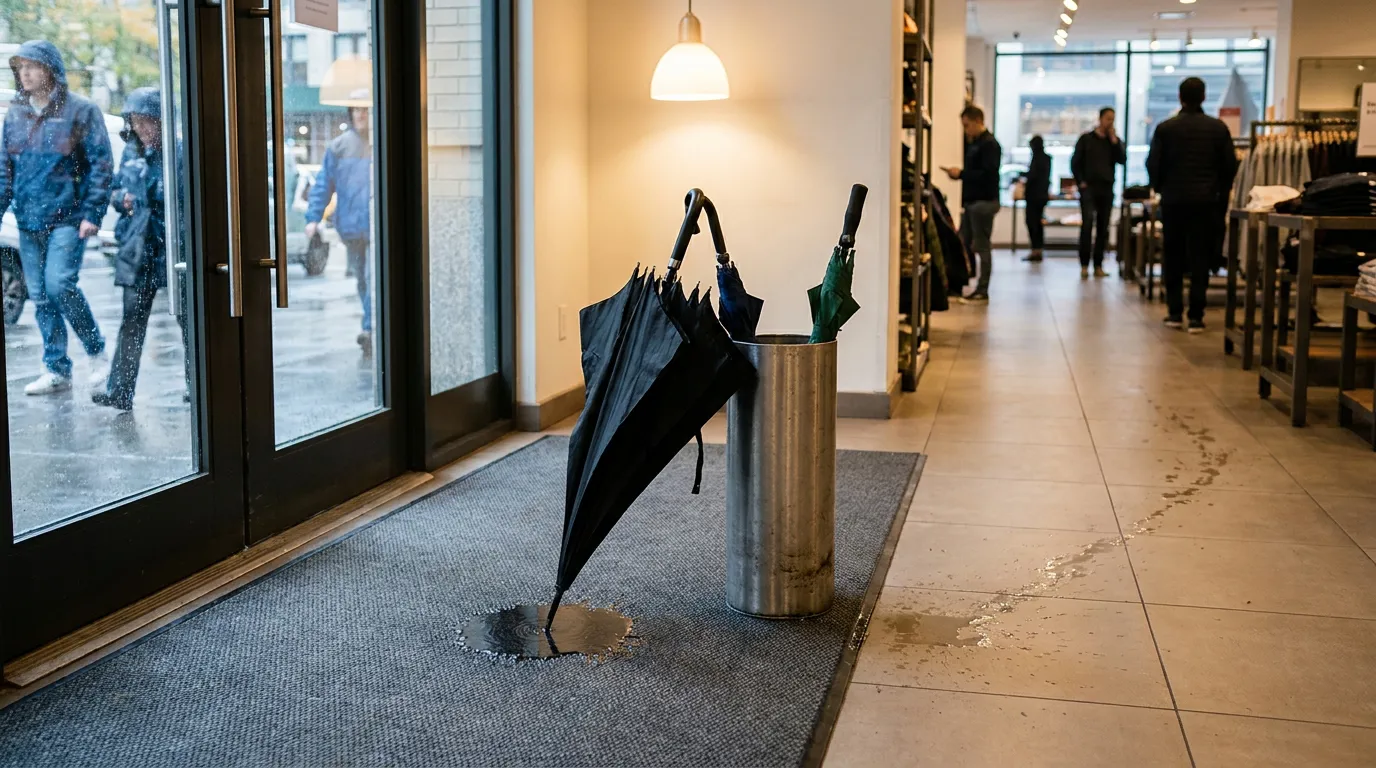
In most store slip and fall cases in New York, the key question is notice. Actual notice means the store knew about the puddle, for example because an employee saw it or a customer reported it. Constructive notice generally means the water was visible and had been there long enough that staff should have found and fixed it. Knowing in general that customers may track in rain is usually not enough by itself. Courts may consider how long the hazard existed, how busy the entrance was, and whether employees walked past it.
The Duty to Warn
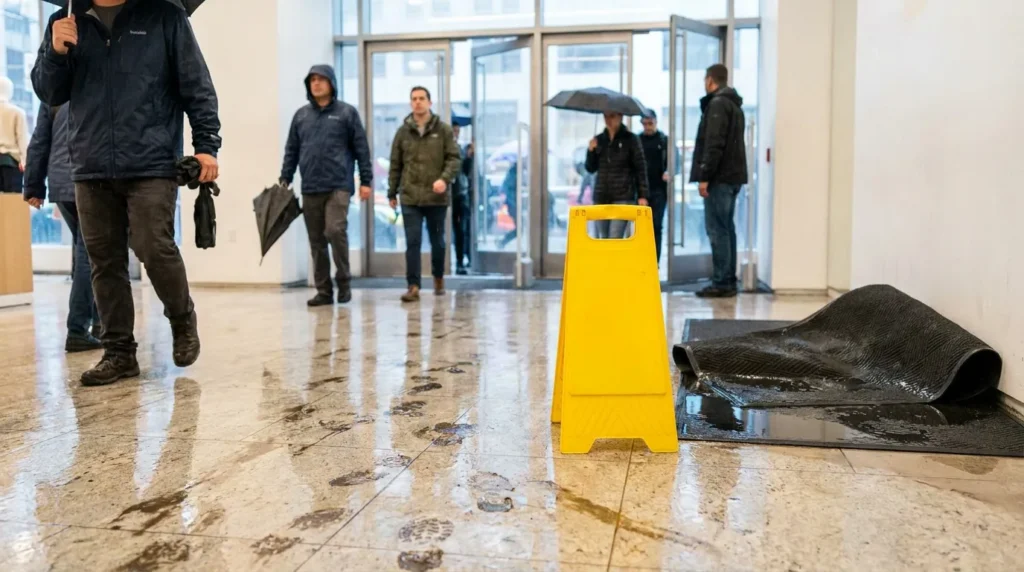
Stores generally must take reasonable steps to fix known hazards or warn customers about them. In rainy weather, that may mean putting out wet floor signs, laying down mats, or assigning staff to check entrances. A missing sign or a soaked, curling mat could become important evidence.
How the Storm in Progress Rule Affects a Slip and Fall Due to Rain
New York courts recognize the "storm in progress" doctrine, which can shield property owners from liability for falls caused by rain or snow while a storm is still going on. Stores generally do not have to keep removing water while rain is still falling, and owners and their insurers often raise this defense early.
The rule has limits. An owner may be liable once the storm has ended and it has had a reasonable time to deal with the wet floor. An owner may also be liable during a storm if its own cleanup made the hazard or made it worse. If the rain stopped hours before your fall and water kept pooling at the entrance, the defense may be weaker.
Facts That May Strengthen a Rainwater Claim
- Weather records showing the rain ended well before your fall
- A large pool of water rather than a few wet footprints
- No wet floor signs or mats despite obvious rainy weather
- Employee statements or past complaints about the same entrance
- Surveillance video showing staff walking past the puddle
💡 Pro Tip: Write down the exact time of your fall and whether it was still raining when you entered the store. Your memory, along with official weather data, may later help set the timeline.
Proving Your Tracked-In Rainwater Slip and Fall
A tracked-in rainwater claim generally requires proof of duty, breach, causation, and damages. You may need to show that the store owed you a duty, that it created the water hazard or failed to fix or warn about it within a reasonable time after notice, that the water caused your fall, and that you suffered real losses.
Saving Evidence Before It Disappears
Evidence in wet floor cases can vanish quickly. Water dries, stores replace mats, and surveillance systems may record over footage. Take photos of the floor, your shoes, and the entrance right after the fall. Get witness names and phone numbers, ask the store to file an incident report, and get medical care promptly so your records can help link your injuries to the fall.
You can sometimes get store video through legal process. In a New York lawsuit, you generally get surveillance footage through discovery demands, and a prompt letter asking the store to save it can help keep it from being erased. You can learn more in our guide to your rights after a big box store fall.
How Shared Fault and Insurance Can Affect Your Recovery
New York follows a pure comparative negligence rule under N.Y. CPLR 1411, so being partly at fault generally reduces your recovery rather than barring it. If a jury finds you were 20 percent responsible for not watching where you walked, your award would generally drop by that share.
Collateral source payments may also lower a verdict. Under CPLR 4545 collateral source rules, if health insurance or another collateral source paid, or with reasonable certainty will pay, your medical bills or lost wages, the court may reduce the award by that amount. This does not include life insurance or payments with a legal right of repayment, such as Medicaid or Medicare liens. The court also credits the premiums you paid in the two years before the claim arose. The reduction is made after the verdict, usually when the defendant asks.
Some money you receive generally cannot be used against you. Under N.Y. CPLR 4545(b), voluntary charitable gifts, such as donations from a community fundraiser, do not count as a collateral source.
| Factor | How It May Affect Your Case | Authority |
|---|---|---|
| Your share of fault | Generally reduces recovery by your share | N.Y. CPLR 1411; CPLR 5041(a) |
| Health insurance payments | May reduce award after verdict unless subject to a statutory lien | N.Y. CPLR 4545(a) |
| Charitable donations | Not used to reduce award | N.Y. CPLR 4545(b) |
| Future damages over $250,000 | May be paid through an annuity | N.Y. CPLR 5041(b), (e) |
Payment Structure, Settlements, and Store Workers
For larger verdicts, New York law controls how damages are paid. Under N.Y. CPLR 5041(b) and (e), past damages and up to $250,000 in future damages are generally paid in a lump sum. Future damages above that amount may be paid through an annuity, and payments for future pain and suffering generally last no more than 10 years.
These rules generally do not limit settlements. N.Y. CPLR 5047 lets an injured person, the defendant, and the insurer settle personal injury claims on terms they agree on. Many wet floor cases settle, though settlement is never guaranteed.
Store employees who slip on tracked-in rainwater are generally in a different position. Under N.Y. Workers’ Compensation Law § 11, workers’ compensation is usually the only remedy against the employer. One exception applies when the employer failed to carry coverage. An employee may also be able to sue someone other than the employer, such as a separate building owner or cleaning contractor.
Deadlines You Should Know About
Time limits can end a valid claim, so act promptly. For personal injury actions against private parties, N.Y. CPLR 214(5) generally sets a three-year deadline, though exceptions may apply depending on who owns the property. Claims involving government property have much shorter deadlines, often requiring a notice of claim within 90 days and a lawsuit within one year and 90 days.
Discovery-based rules apply only in limited cases. N.Y. CPLR 203(g)(1) applies only where a statute specifically provides for it and generally does not apply to an ordinary slip and fall. Talking with a lawyer about your deadline is generally the safest approach.
💡 Pro Tip: Keep every receipt, pharmacy bill, and pay stub after your injury in one folder. Organized records can make it easier to prove damages later.
Frequently Asked Questions
1. Can I sue if it was still raining when I fell?
You may face the storm in progress defense, which generally protects owners while rain or snow is still falling. However, whether the storm had actually ended, or whether the store’s own actions created or worsened the hazard, may still matter.
2. Does a wet floor sign mean I have no case?
Not always. A sign may help the store, but courts may consider where it was placed, whether people could see it, and whether the store also needed to clean up a large puddle.
3. What if I was looking at my phone when I fell?
Under New York’s comparative negligence rule, your recovery may be reduced by your share of fault. Partial fault generally does not bar recovery entirely.
4. Will my health insurance payments reduce my compensation?
They may, under N.Y. CPLR 4545(a), after the verdict, with credits for premiums you paid. Payments subject to a statutory lien, such as Medicaid, do not count, and CPLR 4545(b) excludes charitable donations.
5. I work at the store. Can I sue my employer?
Generally, no. Workers’ Compensation Law § 11 usually makes workers’ compensation the only remedy against your employer, unless your employer failed to carry coverage. A lawyer can also check whether you have a claim against someone else.
Protecting Your Rights After a Rainy Day Fall
A slip and fall due to rain in a New York store may support a claim when the store created the hazard or had notice of the water and failed to deal with it within a reasonable time. The storm in progress rule, comparative negligence, collateral source rules, and filing deadlines can all shape the outcome. Gathering evidence and getting medical care promptly often make a real difference.
If you were hurt on a slippery store floor, an experienced slip and fall due to rain lawyer can help you understand where you stand. Reach out to Goldberg Sager & Associates for a free consultation by calling 718-645-6677, or schedule your consultation online. You can also learn more about working with a slip and fall due to rain lawyer who helps injured visitors throughout Brooklyn and New York.
Disclaimer: This content is for informational purposes only and is not legal advice. Every case is unique, and results may vary. Consult an attorney about your specific circumstances.